Once again I'm in danger of angering people who dislike winter by writing about my favorite sport — even before the all the leaves have fallen — but I have a good reason for my early enthusiasm about skiing. You see, Marge and I just booked a ski vacation, so we're psyched about the upcoming winter.
I can almost hear the roar of the snow guns at night, and can see the rime in the trees sparkling in the morning sunlight. I can almost feel the wind in my face as I swoop down the mountain, leaving my cares far behind. For me, winter brings clarity to life like no other season. It is a time when everything seems in sharp focus, a time when every breath offers a visible affirmation of life.
So today I'm posting one of the most electrifying ski runs of all time, Austrian Franz Klammer's gold medal-winning performance in the 1976 Olympic downhill in Innsbruck, Austria. I know people who don't even ski who remember Klammer's run.
Compared with what today's powerfully built racers can do on modern equipment, Klammer's 1 minute and 45 second journey looks almost primitive. Yet it remains a let-it-all-hang-out pursuit of victory for the ages that begs a question:
How much are you willing to risk to achieve your goals?
Saturday, October 31, 2009


Thursday, October 29, 2009
Prodigy or parody?
A friend sent me the following story, about a 5-year-old Romanian boy who is already making a name for himself on the Internet and in the world of bodybuilding. It's so bizarre that I'm at a loss for words, for once. If you'd prefer to skip the story and cut right to the video, here it is:
I wish Giuliano only the best. Something tells me he'll need all the help he can get.
I wish Giuliano only the best. Something tells me he'll need all the help he can get.
Tuesday, October 27, 2009
Lack of seat belt use is driving me mad
I don't usually put much stock in those geographical Top Ten lists that periodically get published — you know, the ones with such headlines as Best Cities in Which to Live, Best Places to Retire, Best Party Colleges! Nevertheless, they can make for a fun read.
Self magazine recently came out with "The 10 Healthiest Cities for Women," which caught my attention because my first thought was, what would make a city healthy for women but not for men, too? Well it turns out that some of the criteria were women-specific, such as having a large selection of ob-gyn doctors and low rates of violent crime and rape. (Yikes! I find it disturbing that this latter statistic can make or break a city.)
Burlington, Vt., topped the list, and Fargo, N.D., rounded out the top ten. In general, the healthiest cities were those in which women had lower disease rates, were less likely to be victims of crime, had access to good medical care, ate well, exercised and got adequate sleep.
The Self survey of 100 cities encompassed all 50 states. Naturally, I was curious to see how Rhode Island fared. The Providence, R.I./New Bedford, Mass. metro area ranked 48 out of 100. While women here were found to be less likely to die of breast cancer and were cited for their diligence with clinical exams, I was angered to read this: "Among the places where women are least likely to wear a seat belt."
We here in New England pride ourselves on our fine universities, our intellectual curiosity and our open-mindedness. So how can it be that women here — or anyone, anywhere, for that matter — are still not buckling up? Yet Massachusetts ranks dead last in seat-belt use in the United States, with only 66.8 percent of drivers and passengers wearing them, and Rhode Island isn't too far ahead at 72 percent.
I was never a particularly good student of science, but even I understand that if you're hurtling along and your car should come to a sudden stop due to impact, your body will continue to hurtle along at pretty much the same speed as it was traveling before.
This British TV ad sums up the role of physics in a crash quite well:
It's too bad, but we'll never see such ads on this side of the Atlantic — it seems they're too graphic and disturbing for our sensibilities. Kind of ironic, isn't it, when you consider the violence we see on TV every day, both real and fictional?
When it comes to seat-belt use, apparently we'd rather be treated in a more gentle manner, with inane slogans like "click it or ticket." I'm sure the threat of a small fine isn't going to prompt the denizens of denial to buckle up, and maybe I'm naive to think that jarring ads like the one above would have a better chance of success.
I just don't get it. What's so hard to understand about the importance of wearing seat belts?
Saturday, October 24, 2009
Soaring with the Angels
Now that it's Saturday, it's time to unwind and have some fun. And what better way to do it than flying with the Navy's Blue Angels?
OK, maybe some of you won't agree with me. Let's face it, when it comes to flying, people usually fall into one of two very different camps: those who love it (me!) and those who dread it (hi Kerstin!). The Rhode Island Air National Guard Open House and Air Show may be a good eight months away, but for those of you like me, it's never too soon to start getting psyched up.
Here's some beautiful video from the cockpit of one of the Blue Angels' F/A-18 Hornets that'll make you feel so much like you're up there with them that you might want to have a paper bag handy.
So strap yourselves in, hit the full-screen icon, and enjoy the ride!
Wednesday, October 21, 2009
Not feeling motivated? Get SMART
Dropout rates in exercise programs are notoriously high, as much as 50 percent, according to some estimates. So what keeps some people pushing onward, long after others have permanently racked the dumbbells? In a word, success.
How many people want to commit to long hours of hard work — in any endeavor — when they do not see any progress as a result of their efforts?
 In some instances, it may be the very goals we set for ourselves that undermine our ability to succeed. Perhaps we have reached too far in envisioning what we want to accomplish, or set our sights on something that cannot be measured, making progress seem elusive.
There's a model for setting goals that goes by the acronym SMART. Goals should be specific, measurable, attainable, relevant and time-bound.
Without SMART goals, planning can be difficult, feedback missing, and motivation lacking.
Say I show up at the gym one day, seeking the services of a personal trainer, and I tell her, "My goal is to get really strong." That's more of a nebulous wish than a goal.
It would then be difficult for my trainer to design a program that will keep me engaged, and difficult to determine whether I've succeeded, because I never defined what I meant by strong, and I never set a deadline for accomplishing my goal.
Instead, it would be better to reframe my goal in this way: "I'd like to increase the amount of weight I can bench-press by 5 percent every month until I can bench-press and lift my bodyweight in 12 to 16 months. " I now have a clearly defined and attainable goal whose progress can easily be measured.
Having a defined set of steps to reach your goal can help keep you focused and motivated. It is much easier, for example, to think about losing 2 pounds a week than to think about having to lose 50 pounds.
The SMART principle need not be confined to fitness matters. It can be applied to any goal you might have, whether it's earning a college degree, learning a foreign language, or finding a new job.
So go ahead and "get SMART." If you fall a bit short of your goals, at least you can say, to quote secret agent Maxwell Smart from the old TV show of the same name, "Missed it by that much."
Monday, October 19, 2009
A word of caution about exercise
Some sad news from the running world this past weekend: Three men died while competing in a marathon in Detroit on Sunday. The men collapsed within 16 minutes of one another between the 11-mile and 13.1-mile markers. The causes of their deaths have not yet been determined.
 I mention this incident because exercise, while having the potential to benefit nearly everyone, is not without its dangers, particularly for those with undetected heart disease. An estimated 75,000 heart attacks occur in the U.S. each year after heavy exertion.
That's why it is always a good idea to confer with your doctor before beginning a program of strenuous exercise, especially if you have two or more risk factors for coronary heart disease.
Deaths in marathons and other road races are relatively uncommon. The Detroit Free Press/Flagstar Marathon last had a fatality in 1994, when a 42-year-old man suffered a heart attack, according to the Associated Press. More than 19,000 people had registered for Sunday's race, and presumably most of them finished safely.
A thorough physical examination and exercise stress test might seem unnecessary or inconvenient should you ever be asked to undergo them before beginning an exercise program, but they are for your own protection and benefit.
Coronary heart disease is the number-one cause of death in the United States, and there's an old saying that explains why it has achieved that dubious status:
Often, the first symptom of heart disease is death.
Saturday, October 17, 2009
Words to live by
I had been hoping today to offer a video of a great motivational sports speech, either from real life or the movies, because I'm planning to write about motivation next week. Sadly, though, most of the videos I found in that category were too full of profanities to post here.
Why a verbal thrashing of players that borders on abuse is considered motivational, I'll never understand. Maybe it's effective in getting the adrenaline pumping, but I think at the root of it is instilling a fear of failure, and I don't think that's a viable approach for long-term motivation.
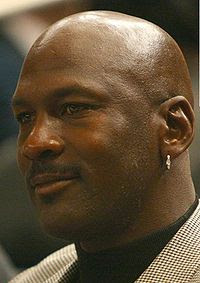 I'll leave it to basketball great Michael Jordan to explain why.
Why a verbal thrashing of players that borders on abuse is considered motivational, I'll never understand. Maybe it's effective in getting the adrenaline pumping, but I think at the root of it is instilling a fear of failure, and I don't think that's a viable approach for long-term motivation.
 I'll leave it to basketball great Michael Jordan to explain why.
"I've missed more than 9,000 shots in my career. I've lost almost 300 games. Twenty-six times, I've been trusted to take the game-winning shot and missed. I've failed over and over and over again in my life. And that is why I succeed."— Michael Jordan
Subscribe to:
Posts (Atom)


